Southern marsh bog
@Ian Rickards

July on Hothfield Heathlands: Orchids & bats

On a quiet evening in late May, Area Warden Will Glasson led a group of enthusiasts to look for some of the less-seen residents of the reserve. Will reports: ‘The theme of the evening was bats and amphibians. The UK has 7 species of native amphibian (5 being found on Hothfield) and 18 resident bat species. This event provided an opportunity for people to see a selection of these animals. 

We set off around dusk on a short loop walk incorporating a number of the pools and ponds on site which are a magnet for both species groups. It wasn’t long before our set-frequency detectors started to click, telling us that one of our more numerous species was about – the pipistrelle bat. Using our echo-meters we were able to view the translated sonogram which can also be used to identify the species across all frequencies, revealing several other bats species foraging across the reserve. Using our torches we were also able to have a look into the ponds, watching for aquatic life including amphibians basking in the shallow water edge soaking up the last bits of warmth from the day. Frogs, toads, palmate and smooth newts were seen darting into the depths as the light hit them.  As the evening neared its end and we headed back towards the car park one of our nocturnal scrub nesters started up their unmistakeable tune – one of our male nightingales trying to attract a mate. In total eleven people attending, even coming from as far afield as Cambridge to see what this amazing reserve has to offer.'

The offer includes two orchids uncommon in Kent and flowering now. Kent is rich in orchids so why just two here? Ian Rickards reminded me that we do have records for common spotted, pyramidal and bee, and continued: ‘The soil chemistry plays a big part, with most of the Kent orchids associated with chalky, alkaline soils.  The acid soils of Hothfield are fairly unique hence the more unusual orchids.  Having said that, Southern Marsh can be found on many good quality wet grassland sites.'

Heath spotted orchid. @ Margery Thomas

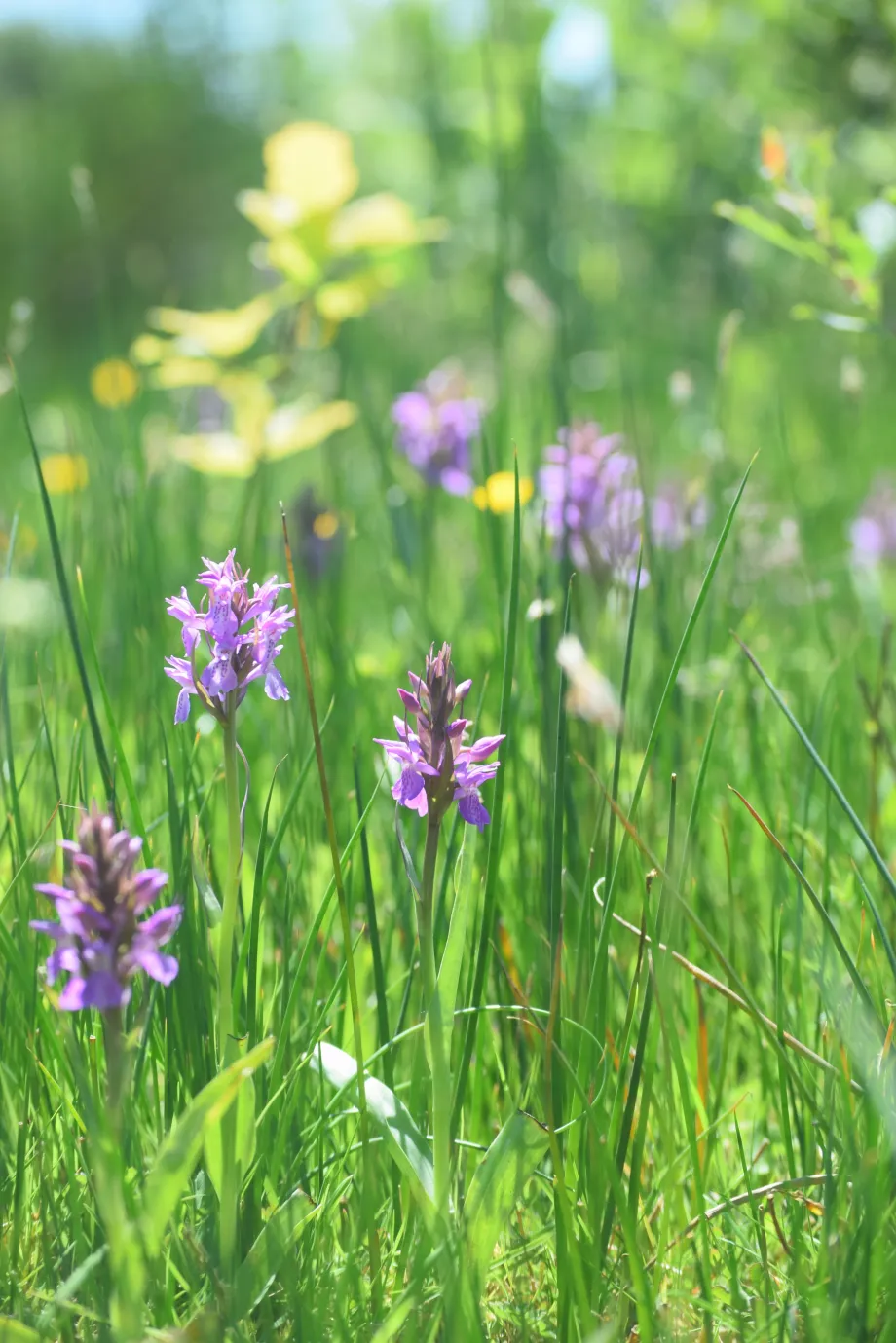
Pale pink spires of the heath spotted orchid Dactylorhiza maculata are easily seen in and around the main bogs boardwalk, on the left as you walk down from the Cade Road car park. Alex Lockton records that, being more restricted to bogs and acid grassland it is considered an axiophyte of these habitats. Sarah Raven describes the flowers as ‘blackcurrant ice cream doing a can-can, chunky, frilly,’ with lobed lower petals covered in darker pink/purple squiggles. On the slopes it grows tallest in the shelter of young bracken, in a flowery mead of tormentil, white clover, honeysuckle, grasses and sedges, heath bedstraw and milkwort, and speedwell, with rosettes of devils’ bit scabious leaves and young ragwort, soft seedling birch and oak, alive with crickets and backed by banks of young ling. The twittering young birds and the rustling aspens in the bird sanctuary add to the magic. 

In the bog it grows on hummocks and the sphagnum moss, not in the water, its companions bog asphodel, bog cotton, water buttercup, lousewort, tormentil always, ragged robin, cross-leaved heath, bog pimpernel round-leaved sundew and marsh thistle. An airy floral display that belies the tenacity of plants adapted to difficult conditions. More magic as a pair of male and female broad bodied chaser dragonflies dance over a bog pool.


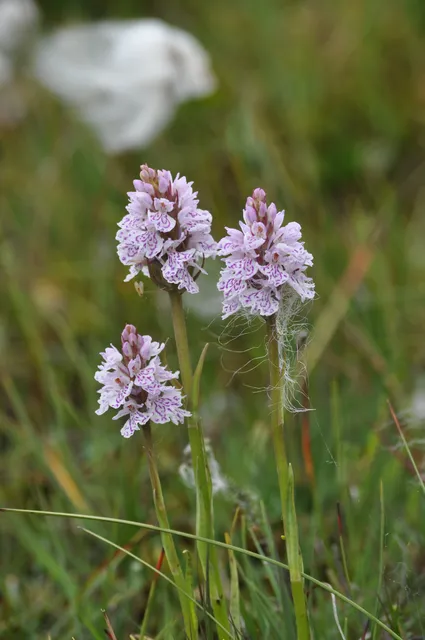
Southern marsh orchid . @Ian Rickards

The tall purple spikes of Southern marsh-orchid Dactylorhiza praetermissa are less visible to walkers but Alex Lockton records it as ‘abundant in the lush growth of bog 4 though rare in other bogs; it is typical of marshy grassland and fens. A few plants of the hybrid of these two orchids also occurs in the bog closest to Lakeside, but it can be difficult to find amongst the swarm of rather variable Southern Marsh orchids.’ Neither species produces nectar but both are pollinated by insects including bees, attracted by patterns visible to their ultraviolet vision as well as the patterns humans perceive. 

Margery Thomas


I continue to enjoy and learn from Margery’s monthly articles and am forever grateful for her wonderful writing skills and endless enthusiasm. A huge thank-you from myself, Kent Wildlife Trust, and the rest of the readership.
Ian Rickards, Area Manager


10 years of articles

A huge thank you to Margery for her efforts, time, and dedication to Hothfield Heathlands over the past decade.

Below you can read Margery's very first article for KWT, written in March 2016!

Read here


I so enjoy reading Margery's articles every month. Her detailed observational writing and technical knowledge brings me joy and new understanding! To have written 100 articles - and to have volunteered for the Trust for more than 10 years - is just brilliant, and we are hugely grateful.
Rosie Parry-Thomson, Marketing Officer

Read more of Margery's blogs

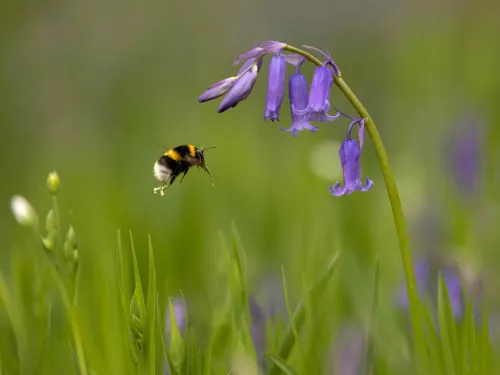
Bumblebee and a bluebell
©️Jon Hawkins – Surrey Hills Photography

May on Hothfield Heathlands: Magical bluebell weeks

Blog

The glossy green spears that pierced dense leaf litter in late winter are now transformed into sheets of violet-purple-blue in the woodland edges of the reserve. The magical bluebell weeks began fairly early, a soft scent and a flood of colour that…

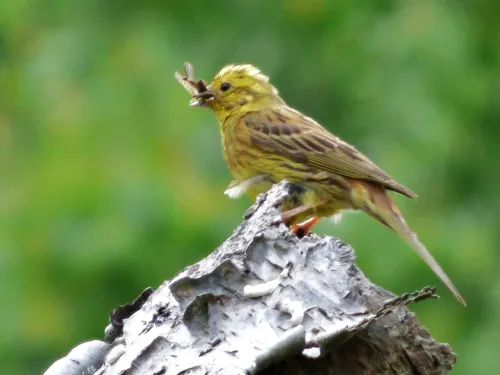
Yellow hammer with lunch
©️ Val Butcher

April on Hothfield Heathlands: Highland cows & nesting birds

Blog

We are into full nesting season including the birds who nest on the ground or very low down in scrub, which is over half of Britain’s breeding species including the stonechat, robin, blackbird, skylark, yellow hammer, tree pipit and chiff chaff, not to…

Peacock butterfly on a leaf
Ian Rickards

March on Hothfield: Spring is in the air

Blog

It’s all happening, and unlike February, this month you can see and hear the signs, including the welcome trickling of water thanks to leaky dams and, yes, an awful lot of rain, so the squelch of mud on paths as well. Birds are calling, to defend…