Latest update - 30 July 2026
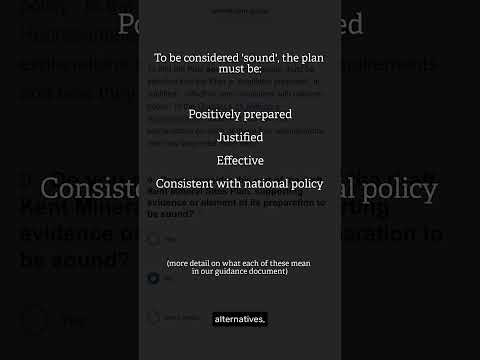
The public consultation period for the Draft Kent Mineral Sites Plan 2026 is now open. Members of the public and organisations now have the opportunity to comment on whether the Plan is legally compliant and sound, including whether it has been positively prepared, justified, effective and consistent with national planning policy.
Kent Wildlife Trust encourages everyone who cares about protecting Oaken Wood to take part in the consultation. We have provided some guidance on how to respond to a Regulation 19 Consultation to help you formulate your response. Below, we've outlined our key concerns with the soundness of the Plan to inform your response too.
How to respond to a Regulation 19 Consultation
Respond to the Consultation online
Background
Kent County Council (KCC) is progressing with their draft Kent Mineral Sites Plan following the ‘call for sites’ consultation and technical assessment work which took place in 2023-25. The updated Kent Mineral Sites Plan continues to allocate Oaken Wood, near Maidstone, for the extraction of hard rock. If quarried, the proposal would result in the direct loss of at least 41 hectares of Ancient Woodland.
- This loss of Ancient Woodland would be greater than the losses from HS2 and the Lower Thames Crossing combined.
- Previous consent for quarrying to the north and east of Oaken Wood has already resulted in the loss of approximately 31 hectares of Ancient Woodland.
- The allocation of Oaken Wood for quarrying would also lead to the degradation of the nearby Oaken Wood Local Wildlife Site, impacting important habitats that support a wide range of rare and declining species.
Why is Oaken Wood important?
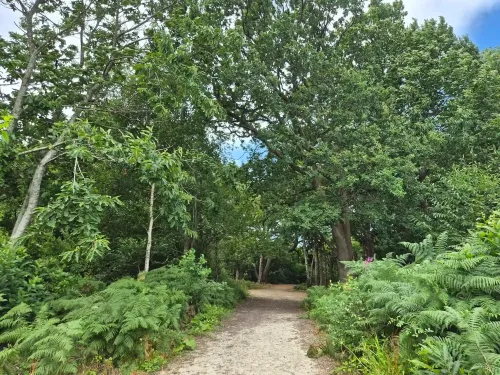
Oaken Wood, an ancient woodland and a Local Wildlife Site, supports a diverse range of flora and fauna. Much of the site is actively managed as a coppice which creates a diversity in the landscape that allows light back to the woodland floor. In return there can be a huge variety of woodland plants that emerge, which then attract an abundance of insects and birds. Coppicing can favour key declining and red listed bird species such as nightingale and nightjar which have both been recorded in Oaken Wood. At least 26 ancient woodland indicator plant species have been recorded within the site. Several scarce or nationally rare species of invertebrates have also been recorded as well as at least 18 common butterfly species.
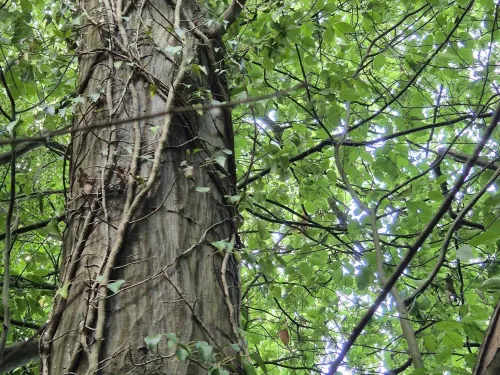
Oaken Wood is a Plantation on Ancient Woodland Site (PAWS). These are areas of ancient woodland that have been continuously wooded since at least 1600 AD, where the original native trees have been cleared and replaced with plantations of introduced or non-native species. These sites still have rich ecological characteristics, often containing veteran trees and supporting ancient woodland indicator species such as bluebells and other wildflowers.
The soils of these ancient woodlands are among their most important features with a rich mycorrhizal network and a seed bank that acts as a natural store of dormant wildflower, tree and plant seeds. The woodland soils have absorbed significant amounts of carbon over centuries. These complex ecological systems underpin the woodland’s biodiversity and resilience and cannot be recreated or replaced once destroyed.
Ancient woodlands now make up just 2.5% of the UK’s total land area. With a changing climate and a significant decline in species in the UK we cannot afford to lose anymore.
Our 5 key concerns
Victoria Bushell
1. Ancient woodland can't be replaced — so the bar for destroying it is deliberately high
The National Planning Policy Framework says that development that destroys irreplaceable habitats like ancient woodland should be refused unless there's a wholly exceptional reason and a credible plan to compensate for the loss. Oaken Wood's allocation as a quarry site hasn't met either test.
Needing stone for construction and historic building repair isn't "wholly exceptional." We recognise the importance of Kentish Ragstone in conserving many of our nation's historic buildings and monuments; however, we should not preserve one aspect of our historic heritage by sacrificing another.
And there's no credible compensation plan. Losing at least 41 hectares of ancient woodland would be one of the biggest losses of its kind ever seen in England and would require one of the largest compensation strategies ever associated with the loss of ancient woodland in England. Recognised guidance from the Woodland Trust and Natural England recommends replacing ancient woodland at a ratio of 30 new hectares for every 1 lost — meaning Oaken Wood alone would require roughly 1,230 hectares of new planting, in addition to other mitigation measures (see below). No such plan exists or has been shown to be deliverable.
Victoria Bushell
2. The numbers don't add up — there isn't enough compensation to go round
Alongside compensating for the loss of ancient woodland, any quarrying within Oaken Wood would also need to deliver suitable mitigation/compensation for the deterioration of the ancient woodland left behind, any legal mitigation requirements for protected species, and the delivery of a Biodiversity Net Gain. No one has shown how all of this can be delivered alongside the massive tree-planting needed to offset the initial loss.
Victoria Bushell
3. Ancient woodland is a vital carbon store — and most of it is hidden underground
Ancient woodland makes up about a quarter of UK woodland but holds 37% of all the carbon stored in our woods and trees. And that's just the trees — it doesn't include the soil. Up to 75% of the carbon stored in UK forests is actually in the soil, not the trees.
No assessment has shown the true climate cost of losing this centuries-old carbon store, or that new planting could ever make up for it.
Victoria Bushell
4. This isn't a one-off loss — it's the latest in a growing pattern
Quarrying Oaken Wood would destroy 41 hectares of ancient woodland, on top of 31 hectares already lost to previous quarry extensions nearby. That's 72 hectares gone in total — and the combined loss of carbon, wildlife habitat and landscape has never been properly measured.
How much ancient woodland has to disappear before it's considered too much?
Victoria Bushell
5. Other options haven't been properly explored
The one study into alternative sites ruled several out simply for being "too small." But it's unclear whether anyone seriously considered quarrying several smaller sites to match the ragstone output of Oaken Wood — rather than treating it as an all-or-nothing choice.
Next steps and how you can help
The public consultation is now open until 10 September. Members of the public and organisations can comment on whether the Plan is legally compliant and sound, including whether it has been positively prepared, justified, effective and consistent with national planning policy.
Kent Wildlife Trust encourages everyone who cares about protecting Oaken Wood to take part in the consultation.
Sign up to Speak Up for Nature
Be the first to hear about updates to this campaign and actions you can take for nature in Kent by signing up to our advocacy mailing list, Speak Up for Nature.
Frequently asked questions
Despite there being protections for ancient woodland habitat against the threat of development, there is unfortunately no guarantee that this will stop the plans from going ahead. Because of the ragstone in the area, the plan is being pushed through as an exceptional circumstance due to need. We have no clear evidence of this exceptional need, what exactly it amounts to and where it comes from, but there is certainly a world where this plan could proceed and 41 hectares of ancient woodland would be lost. It is also being claimed that a suitable compensation strategy will be put in place to address the loss of ancient woodland which is required under national planning policy. It is our view that it will not be possible to deliver this strategy. We need as many people as possible to respond to the public consultation to try to impact the planning inspector's ultimate decision.
There is an old petition going around, however it's no longer relevant to the stage we are at now. The best thing to do at the moment is to read our campaign page, follow campaign groups like Save Oaken Wood, and respond to the public consultation!