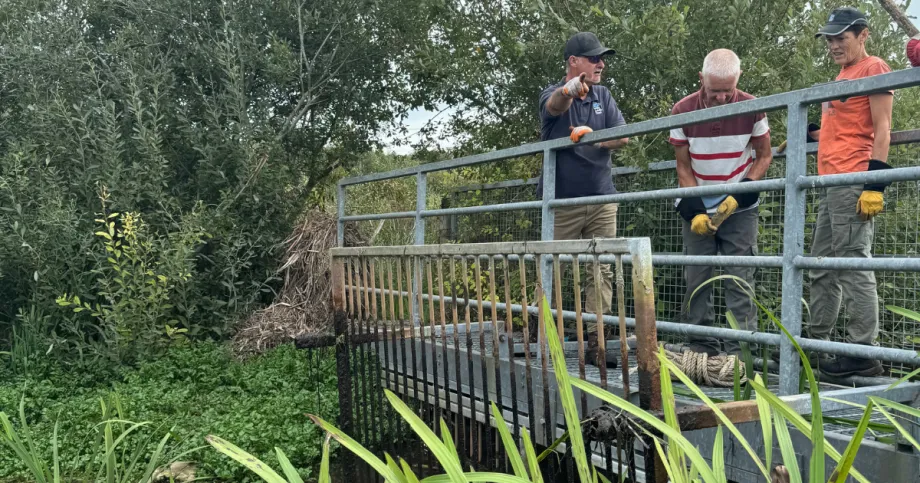
Staff and volunteers removing the enclosure barrier
John Wilson, East Coast Warden at Kent Wildlife Trust, said: “Removing the beaver enclosure barrier at Ham Fen marks an exciting new chapter for a project that has been many years in the making. When we first brought beavers back to the reserve, we wanted to see whether they could help us restore this precious fenland, and the results have been remarkable.
“The landscape they have shaped now supports a huge range of wildlife, while helping to retain water and restore wetland habitat. Now they can move freely beyond the reserve, we’re excited to see how they will shape the wider landscape and help this population become an established part of East Kent’s wild biodiversity.”
Once widespread across Britain, beavers were hunted to extinction in the 16th century for their fur, meat and scent glands. Their disappearance contributed to the loss of the natural wetland habitats and processes they had helped sustain. Their return to the wild offers an opportunity to restore some of these lost ecological processes and bring greater diversity to wetland landscapes.
Helping beavers and people thrive together
The success of Ham Fen has helped demonstrate the important role beavers can play in restoring wetland landscapes. Today, the River Stour is home to England’s largest and nationally important population of wild beavers, whose activity is helping to improve water quality, retain water and create valuable wetland habitat across the catchment.
Kent Wildlife Trust is leading a new partnership project to support the long-term future of the River Stour’s wild beaver population, improving genetic diversity and resilience through carefully managed wild releases and developing practical solutions to help beavers and people live alongside one another.
The project is being delivered alongside Beaver Trust, South East Rivers Trust, the North East Kent Farmer Cluster, the University of Kent’s Durrell Institute of Conservation and Ecology, and Natural England. It is funded through Natural England’s Species Recovery Programme and backed by Defra as part of the Government’s Wild Again: Restoring England’s Wildlife campaign.
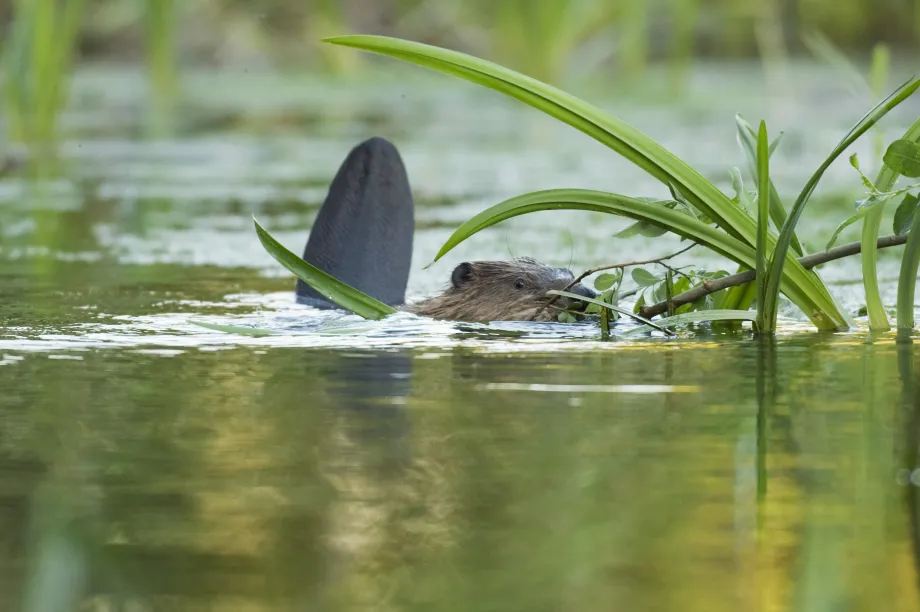
Baby beaver at Ham Fen © Terry Whittaker
Ben Morris, Senior Field Officer at Beaver Trust, said: “Ham Fen has been a key site in demonstrating what beavers can do for wetlands and wildlife, helping to build the evidence and experience that has underpinned their wider recovery in England. This next step reflects how far beaver restoration has come and the growing opportunity to support healthy, connected populations across our river catchments.
“Beaver Trust is pleased to be working alongside Kent Wildlife Trust and the wider partnership as this work develops. As beavers continue to recover, we need sustained support for practical coexistence measures so that landowners and communities have the advice, resources and management tools they need to live alongside them, while helping to build a healthy and resilient beaver population across the Stour catchment.”
Working with more than 250 landowners, farmers and local organisations, the partnership will help to restore river and wetland habitats and develop practical solutions for people and beavers to live alongside one another.
This work builds on the East Kent Beaver Advisory Group, established in 2019 to bring together organisations across conservation, farming, government, infrastructure and land management to support harmonious coexistence between beavers and people.
From pioneering experiment to wild population
The Ham Fen project began in response to the challenges of restoring one of Kent’s last remaining areas of fenland. Conventional machinery was difficult and expensive to use in the wet conditions, prompting Kent Wildlife Trust to explore whether beavers could help restore the habitat through their natural behaviour.
In 2000, the Trust began work to establish a contained colony of Eurasian beavers at Ham Fen, securing legal consents for a project involving a species that had been absent from British shores for more than 400 years.
Two families were released into the reserve in 2003, and their coppicing, tree felling, dam building and creation of pools quickly demonstrated the powerful role beavers could play in restoring the landscape. A second family group from Germany was introduced in 2008 to support genetic diversity within the Ham Fen population.