
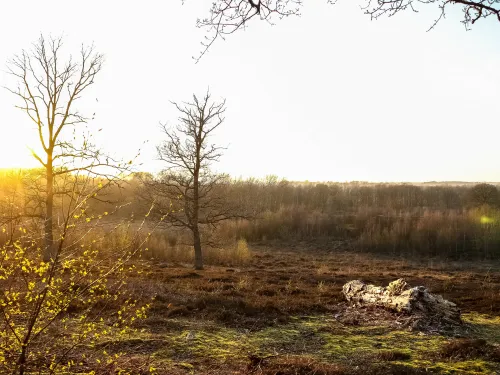
August on Hothfield Heathlands: Moths and rushes
Blog
It's been a hot few months on Hothfield Heathlands! Long-time volunteer, Margery Thomas, reflects on recent work and sightings.

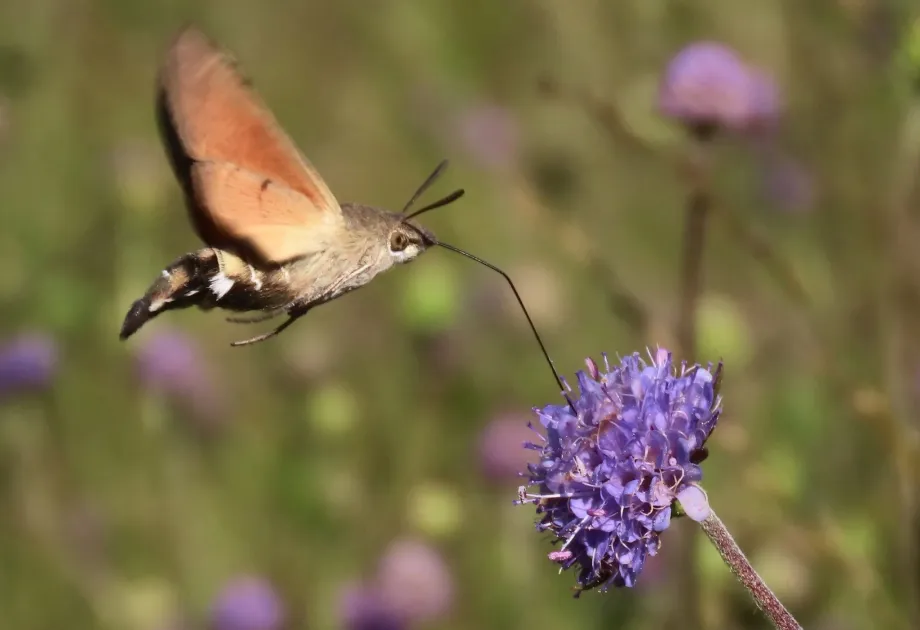
©️ Anne Rowe
The pigs came on site briefly, but due to the drought in August, had to be removed. Without muddy pools to wallow in, pigs’ skin can get badly damage in this hot weather. Our Highland cattle have been replaced by a herd of Dexter cattle, a short-haired black breed, with little horns. The volunteers have worked carefully but steadily through the very hot days, prioritising bracken scything to weaken it, plus brush cutting, tree popping and installing or mending fences and gates. A volunteer commented ‘Huge amount of work in some serious heat’.
Margery Thomas, KWT volunteer
Wildfires are devastating for healthy heathlands, damaging the entire ecosystem. We grieve for the habitats already damaged across the country this summer. Please continue to take great care of this wonderful wildlife reserve through September: as ever, no bonfires or barbecues, no cigarette butts, no littering (particularly glass or disposable vapes). Thank you!
Ian Rickards, KWT Area Manager

Rich in flora and fauna, this important reserve contains Kent's last four valley bogs and one of its few remaining fragments of open heath.
It's been a hot few months on Hothfield Heathlands! Long-time volunteer, Margery Thomas, reflects on recent work and sightings.
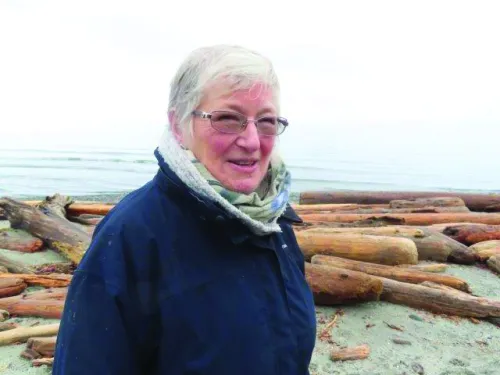
This year marks 10 years since Margery Thomas began volunteering at Hothfield Heathlands. Since 2016, she's written monthly articles on the reserve's flora and fauna, bringing readers into the heart of the heathlands through rich, observant writing,…
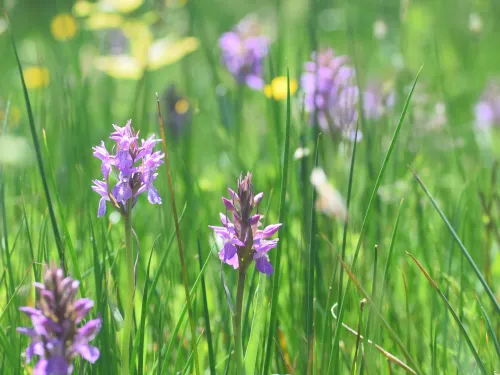
Hothfield's evening bat and amphibian walk revealed pipistrelles, newts, and a nightingale's song, while rare heath spotted and Southern marsh orchids bloom in the reserve's acid bogs.