A scrambling plant, Tufted vetch has violet flowers. It is a member of the pea family and can be seen along woodland edges, on scrubland and grassland, and at the coast.
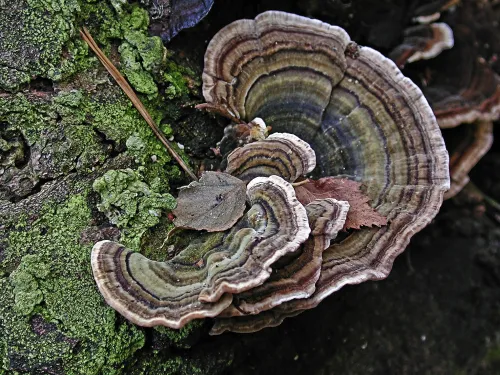
The turkeytail is a very colourful bracket fungus that grows throughout the year, but is at its best in the autumn. Its circular caps can be seen growing in tiers on trees and dead wood.
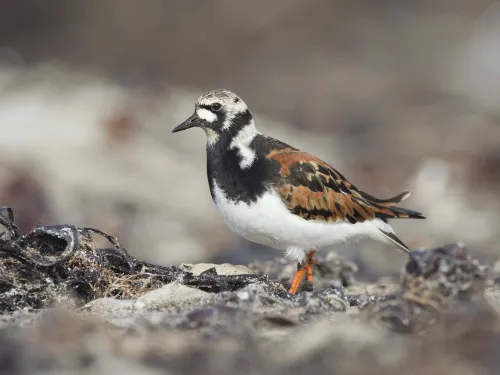
The turnstone can be spotted fluttering around large stones on rocky and gravelly shores, flipping them over to look for prey. It can even lift rocks as big as its own body! Although a migrant to the UK, it can be seen all year-round as different populations arrive throughout the seasons.
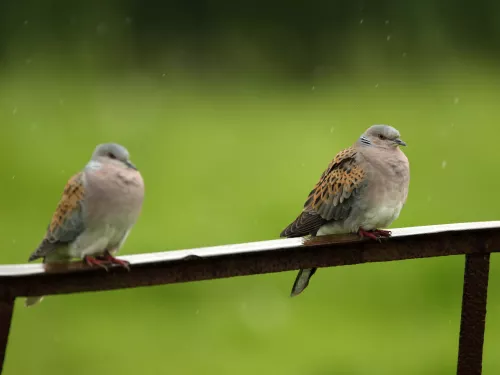
The turtle dove is the UK's fastest declining bird species and is on the brink of extinction. A small and pretty pigeon, it breeds in lowland England and winters in Sub-Saharan Africa.
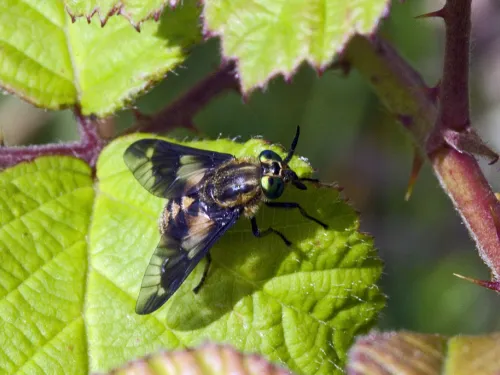
Many of us have felt the painful bite of the Twin-lobed deer-fly (a 'horse-fly') while out walking in damp grasses or woods. But mostly, it prefers to feed on the blood of cows and ponies, often becoming a pest.
The mohawk-sporting caterpillar of this moth is often seen on shrubs and trees in late summer. As adults the orange-brown males fly by day, but the flightless females don't stray far from their cocoon.
The shells of this small scallop are often found washed up on our shores and comes in lots of different colours, including pink, red, orange and purple.!
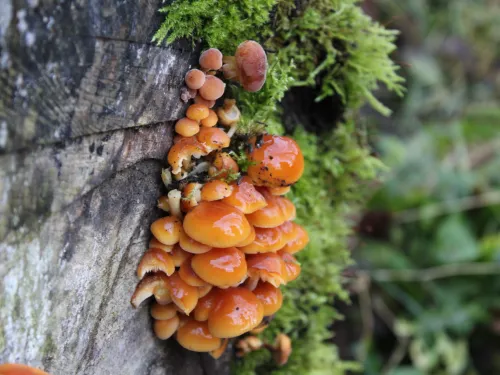
The velvet shank can be found clustered on the dead and dying wood of deciduous trees, such as elm, ash, beech or oak. It has a bright orange cap and can be seen throughout winter.