Wildlife explorer

Want to learn more about wildlife near you? You're in the right place, search below and discover the nature you can help protect in Kent.

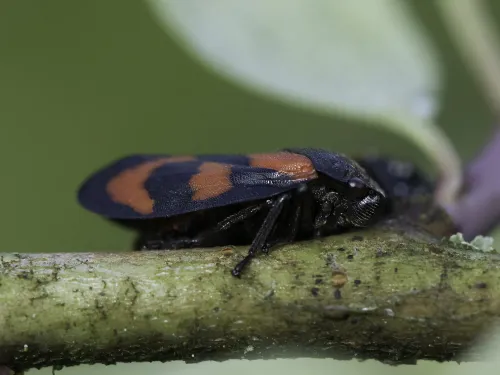
Red-and-black froghopper standing on a stem. It's a compact glossy black bug with red markings on its back. Also known as the black-and-red froghopper
Red-and-black froghopper © Chris Lawrence

Red-and-black froghopper

This distinctive bug is often seen basking on low-growing plants in spring and summer.

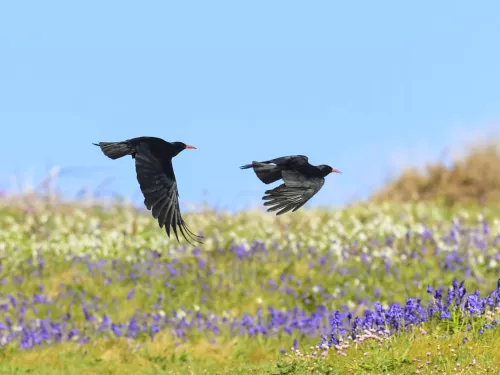
Two flying chough
Bertie Gregory/2020VISION

Red-Billed Chough

As the only crow with a red bill and red legs, the all-black chough is easy to identify. But it's harder to spot: there are only small, coastal populations in Scotland, Ireland, Wales, Cornwall and the Isle of Man.

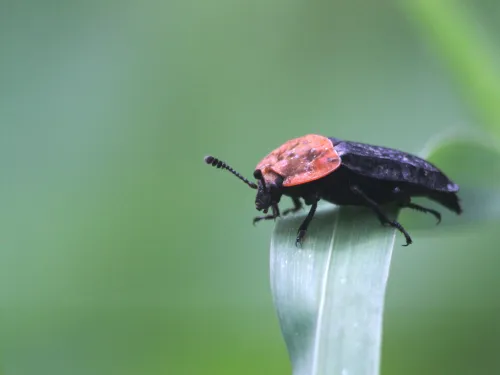
A red-breasted carrion beetle, with its distinctive red pronotum, standing on a folded over leaf
Red-breasted carrion beetle © Tom Hibbert

Red-breasted carrion beetle

These distinctive beetles are often found around dead birds and small mammals.

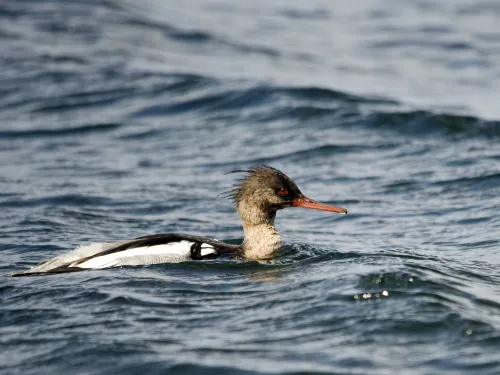
Red-breasted Merganser male

Red-breasted merganser

The streamlined red-breasted merganser is a handsome bird and a great fisher - its long, serrated bill helps it to catch and hold its slippery fish prey. It is most commonly spotted around the coast in winter.

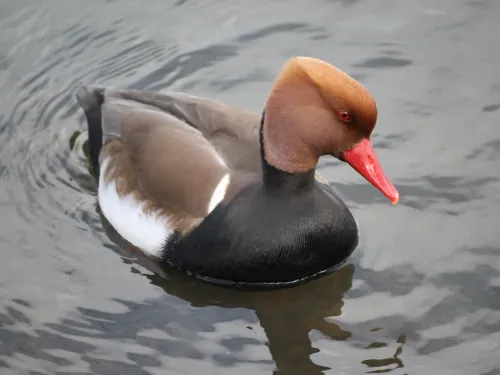
A drake red-crested pochard swimming. It's a striking duck with a black breast, brown back and head, fiery orange crown and bright coral red beak.
Red-crested pochard (drake) © Irene Greenwood

Red-crested pochard

This striking duck was introduced to the UK and is now established as a breeding bird in England.

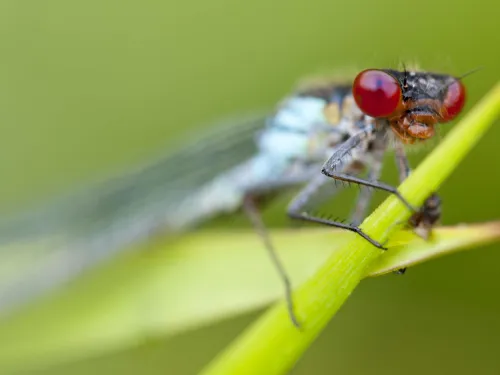
Red-eyed Damselfly
©Ross Hoddinott/2020VISION

Red-eyed damselfly

The Red-eyed damselfly is a small, but robust, damselfly of canals, ponds, lakes and slow-flowing rivers. As its name suggests, it has bright blood-red eyes, but a mostly black body.

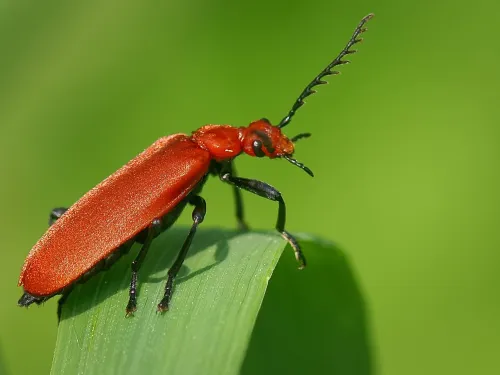
Red-headed Cardinal Beetle
Red-headed Cardinal Beetle ©David Longshaw

Red-headed cardinal beetle

A bright red beetle, with black legs and knobbly antennae, the red-headed cardinal beetle lives up to its name. Look for it in woodland, along hedgerows and in parks and gardens over summer.

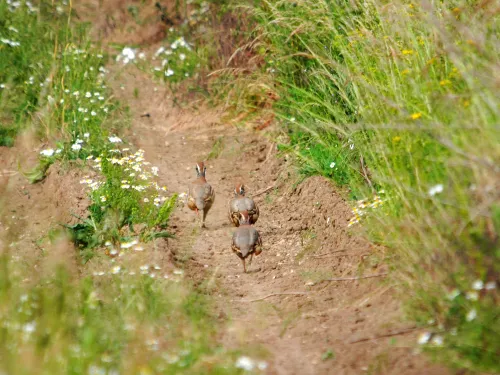
A covey of red-legged partridges running along the edge of a track
Red-legged partridges © Amy Lewis

Red-legged partridge

A plump gamebird, the red-legged partridge is an introduced species that seems to have settled here with little problem. It can be spotted in its favoured open scrub and farmland habitats.

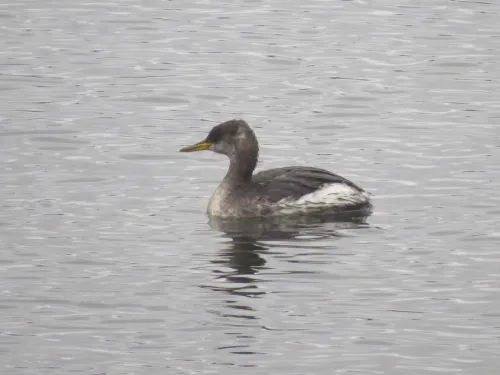
A red-necked grebe in its dusky winter plumage, drifting along a lake
Red-necked grebe (winter) © Tom Hibbert

Red-necked grebe

Red-necked grebes occasionally attempt to nest in the UK, but they're more often seen as winter visitors to sheltered coasts.

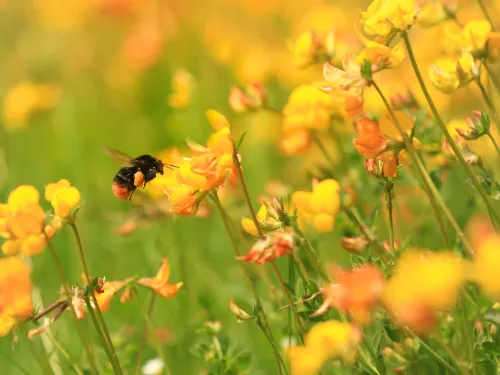
red-tailed bumblebee
Jon Hawkins

Red-tailed bumblebee

Living up to its name, the red-tailed bumblebee is black with a big, red 'tail'.

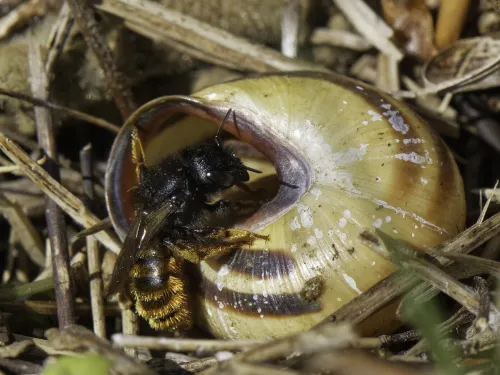
A red-tailed mason bee entering her nest in an empty snail shell. She is a small, slim black bee with a fuzzy orange abdomen
Nick Upton

Red-tailed mason bee

Also known as the two-coloured mason bee, this beautiful bee is famous for nesting in old snail shells.

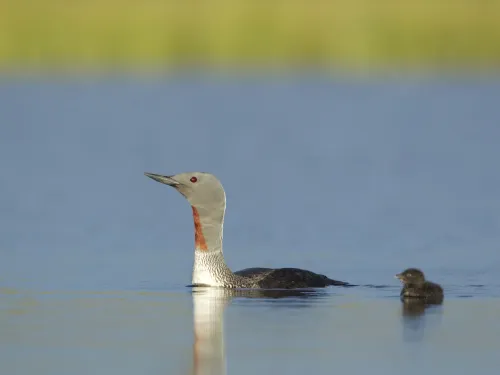
Red-throated Diver (summer-plumaged) and chick

Red-throated diver

The red-throated diver lives up to its name - the distinctive red patch on its throat heralds the breeding season. In summer, it nests in Scotland, but look out for it around the UK's coast during winter.