️© Sally Smith
Hannah Mackins
Having always felt deeply connected to nature and wildlife, Hannah felt urged to act upon the plight of endangered species conservation - she was thrilled to find out that she could turn her passions into a career.
Hannah has a degree in Wildlife Conservation from the University of Kent.
At various wildlife sanctuaries and rescue centres around the world, Hannah has worked as a Biologist and Rehabilitation Assistant as well as being a zookeeper.
When she's not tracking the Blean bison, Hannah can be found teaching Yoga classes or travelling. 24 countries and counting!
Favourite animal
African Elephant
One hope for the future?
That the next generation grow up seeing more biodiverse world that is more compassionate towards wildlife.

️© William Hearle
Heidi Aguirregoicoa
Since childhood, the natural world has always filled Heidi with wonder and a hunger for knowledge. Learning about topics like habitat loss and species extinctions at a young age set her on the conservation path. After hearing about the decline of bee species, Heidi made her own 'Be Good to Bees' Club at primary school to spread awareness. Many years later she strayed from Yorkshire to undertake a degree in Wildlife Conservation from the University of Kent.
Heidi's last role was as a Reserve Warden on Flat Holm Island, focusing on habitat management for gull species, leading tours, and managing a small group of residential volunteers.
When she's not searching the woods for pigs and ponies, Heidi enjoys sketching, helping at a local animal sanctuary or has her nose in a good fantasy book.
Favourite animal
Grey Wolf.
One hope for the future?
Successful lynx reintroduction in the UK.

©️ Sally Smith
Eddie Murray
Eddie also has previous experience as a trainee for KWT based in Sevenoaks. During his time as a trainee, he became qualified in tree felling and chainsaw maintenance. He also gained plenty of practical habitat management experience maintaining a variety of habitats, especially chalk grasslands and woodlands.
When he's not fixing fences and leading task, Eddie enjoys playing tennis with friends.
Favourite animal - Tawny owl
One hope for the future?
Policy makers to take the nature crisis more seriously.
Alison Ruyter - Team Lead
As Alison began to see the impacts our animals had, Alison refined how they were used for both their welfare and biodiversity benefit. KWT were early adopters of landscape scale conservation from the Beaver programme in the 2000’s, living landscapes and farm clusters of the 2010’s to the Bison and Chough projects of the 2020’s. For the last 8 years, Alison has led on developing our internal conservation grazing into a landscape wilder grazing model across Kent, co-ordinating 900 of our own animals over 50+ sites, aiming to deliver impactful biodiversity gain, share our knowledge and promote nature led recovery, not only on our sites but for organisations and individuals too.
Looking after bison - minimal intervention with high welfare
For the most part, the bison roam freely across their 200ha fenced compartments feeding on a diverse tapas of plant and tree species, dustbathing, playing and ruminating. This is exactly what we want, allowing the bison to display the natural behaviours which benefit the woodland in so many ways.
However, there is some essential care that we provide to ensure they have their highest possible welfare as they are still in a system that we have created. We aim to keep our intervention to a minimum.
Bison health and welfare
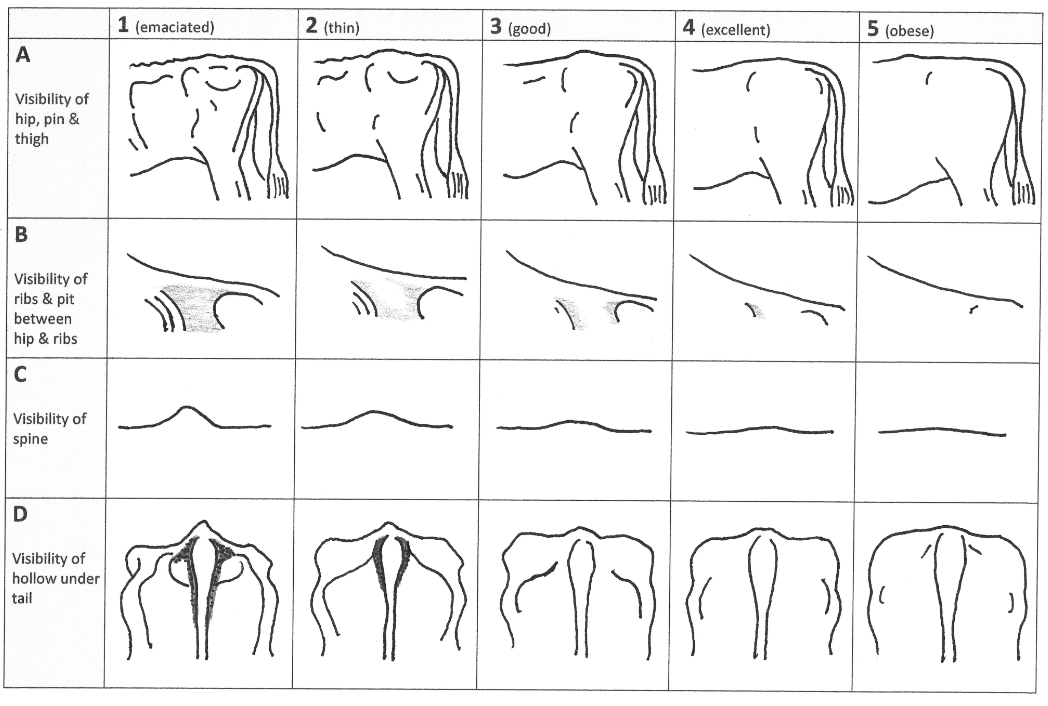
An important part of our role is to check the health of the herd by eye each day. We check that they are walking well and have no visible signs of ailments across their body, including from their nose, mouth, eyes and ears all the way back to their tails and hooves. We regularly body condition score (BCS) the animals using this chart. (INSERT).
There are natural variations in body condition throughout the year as the seasons change the availability of food. Wild animals pack on their fat during the spring and summer in preparation for the winter where their condition starts to fall off with less food. Carrying out the BCS informs us if we need to supplementary feed the bison.
Our bison are also subject to routine testing by law for tuberculosis, so we need to test them in a way that is safe for us and the bison, while causing as little stress as possible. We do this using our Corral Handling facility. We have a dedicated and highly experienced Livestock manager who oversees the hands-on care for the bison if they need a blood test, treatment or collars putting on. Bison rangers assist him there.
We take many precautions to ensure that the bison cannot leave their fenced compartments into public areas, via fence checks and alert systems and more. We organise escape drills with The Wildwood Trust Staff to improve our procedures and practise, in case of the unlikely chance of escape.
How do we track the bison?
It is important to know where the bison are to visually health check them, for ecological monitoring and for health and safety reasons.
We track by fitting adult bison with a Wisent Smart Parks GPS collar, which has been specially designed to be used for European Bison. We then use the EarthRanger app to view the herd's movement.
These amazing companies are used in many conservation programmes worldwide, especially to aid anti-poaching rangers in Africa. The Wilder Blean project is the first to have used SmartParks in the UK.
Maintaining the corral handling facilities and compartments:
Where there is bison, there is dung, which disperses seeds and nutrients all across the woods. However, we do need to ensure that any dung in the handling facility is cleaned out daily to maintain good hygiene. This has been part of the ranger morning routine for a while. After a thorough muck out, the bison are given their supplementary feed if necessary.
As well as maintaining the corrals moving parts, we have a lot of electric and livestock fencing that we must check weekly and fix any issues.
Other conservation grazing animals
Outside of the bison areas, there are a range of other domestic conservation grazing animals. These have included Old English Longhorn cattle, Iron Age pigs, Exmoor ponies and Fell ponies. These animals also need to be checked daily so we induct livestock trained volunteers to our site and animals. These amazing volunteers come rain or shine to search the woods for our animals using the tracking systems or a good old-fashioned walk about.
Our ponies use Digitanimal collars and our cattle have used Nofence collars.
When volunteers are unavailable, the rangers cover this site. We keep an eye on the vegetation on site so that we can adjust grazing pressure where needed. Click here to learn more about our Wilder Grazing strategy!
Monitoring
The project has a huge monitoring programme to assess the impacts of the grazing animals; the bison and traditional management have on biodiversity and bio abundance. This is run by our amazing Monitoring and Evidence Team at KWT. The rangers have taken part in butterfly transects and heath fritillary food plant surveys
We have a wide range of academic partners undertaking research on the project. We supervise safe access into the bison compartments. If you ever see the team staring at the herd for a long period of time, we are trying our best to get specific dung samples from specific bison. This can be quite the challenge but worth it for the interesting data and results it reveals!
Engagement
A big part of our role is to engage with the public and advocate for the project. This can take many forms, whether it be doing an interview for TV, creating social media content, leading a tour or talking with the locals.
Ranger Eddie leads a practical task day with volunteers every Wednesday from 9:30-3pm. Their activities revolve around fence and path maintenance, coppicing, ride cutting and use of some power tools. This is a sociable event with plenty of sweet treats each breaktime!
If you are interested in helping the rangers here or on any other sites in Kent, please look at the volunteering opportunities here.
The Bison rangers also lead tours, also known as Bison Ranger Experiences. These events begin with an introductory presentation about the project, showcasing lots of exclusive footage. This is followed by a walk-through site, spotting wildlife and hoping to get a glimpse of our grazing animals, including the bison.