
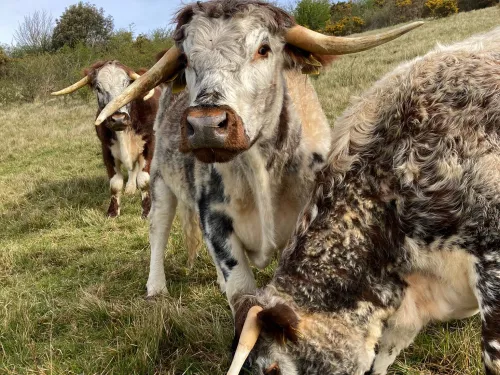
Cows
Highlands, angus cross, dexter, longhorns, and Sussex cattle.

We have smashed our £120k target and thanks to your help, we've unlocked an incredible £130,386 overall for Amazing Grazing! Whether you donated through the Big Give or otherwise, we have been blown away by your support - thank you.
The majority of the money raised came through in a single week thanks to the Big Give Earth Raise Challenge where donations were doubled thanks to our match funders, the Reed Foundation. While we ended the Earth Raise Challenge on 98%, it was enough to take us past our overall target for Amazing Grazing - by £10,000, in fact!
It's safe to say you have blown our minds with your support and we are endlessly grateful.
As part of our multi-year KWT Nature Restoration Fund designed to power recovery through a series of targeted fundraising sprints, we are shining the light on our Wilder Grazing programme. Amazing Grazing animals munch, chomp, and stomp their way across our reserves, keeping scrub at bay and opening space for wildflowers, insects, and birds to thrive.
We know grazers can be better than power tools when it comes to helping nature thrive. Their natural behaviours help bring life to our landscapes – and now, we must support them so they can continue supporting us.
With their help, we envision a county where our landscapes are more climate-resilient and begin to regenerate for generations to come. Funds raised during this sprint contribute to our overall target to raise £3m for nature by 2030.

could buy a bale of hay to feed grazing animals.

could train and equip a livestock checker, ensuring our animals are monitored daily.

could fund 2 metres of fencing, securing habitat ready for grazing.

could support one grazing animal for an entire year.
Donations will contribute to the vital costs of the Wilder Grazing programme this year, including tools, equipment and transportation, as well as feed, bedding, and welfare costs - ensuring our animals are safe, healthy and happy. But your support will do more than sustain our existing work.
They'll also help us to extend Wilder Grazing to several new sites across Kent, including recently acquired reserves and also external partner sites that are ready for restoration. To do this, we need to ensure the sites are ready for our animals...
Install fencing and a water supply to new sites.
Introduce a no-fence grazing system for some areas managed by our goat herd (providing security without physical boundaries).
Deliver engagement activities which raise awareness of our grazing animals and the invaluable work they do – supporting people and animals to co-exist safely in public areas.
Traditional conservation methods can be costly and time intensive; it’s one of our biggest challenges, relying on machinery and huge amounts of staff and volunteer time. Meanwhile, biodiversity continues to decline at an alarming rate. We simply must restore more land, more quickly, if we are to turn the tide.
That’s where our incredible grazing herds come in.
With new reserves and partner sites ready for restoration, we now have an opportunity to expand the herd’s reach. To do this, we need to install vital infrastructure and improve grazing systems.

Our ground-breaking Wilder Grazing Strategy supports the nature-positive management of our estates, encouraging wildlife recovery and adaptation to the changing climate. Read more about conservation grazing below.

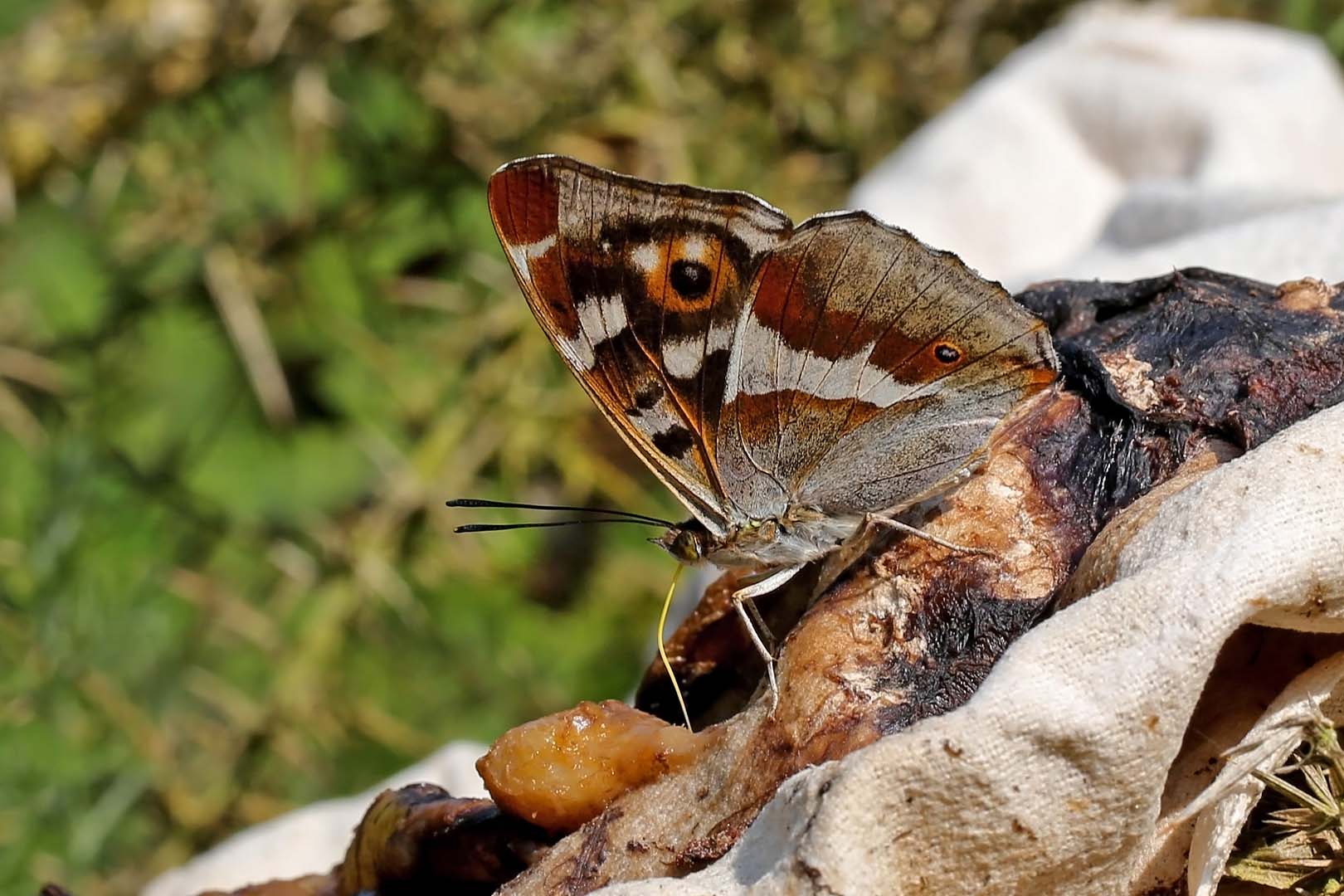
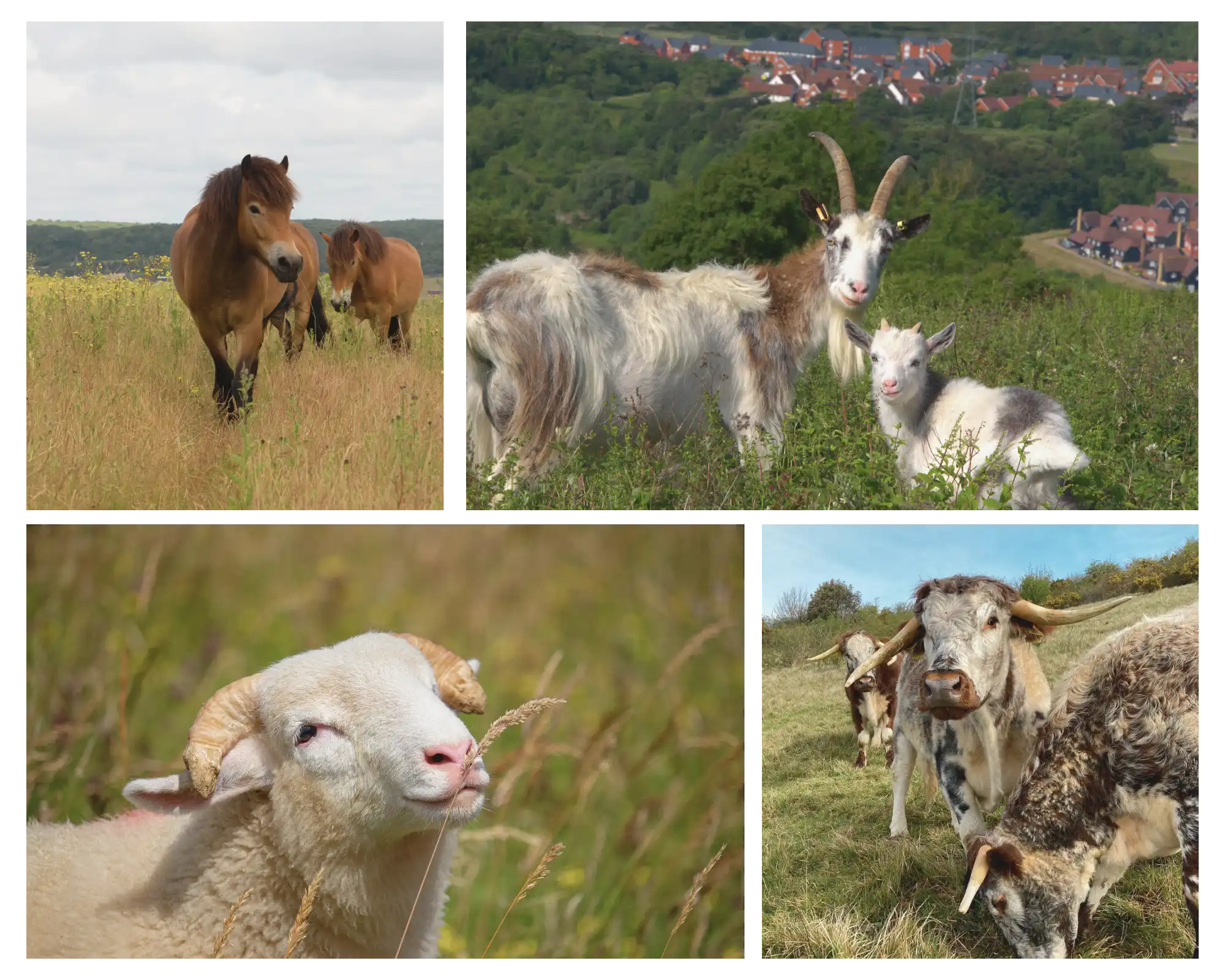
Highlands, angus cross, dexter, longhorns, and Sussex cattle.
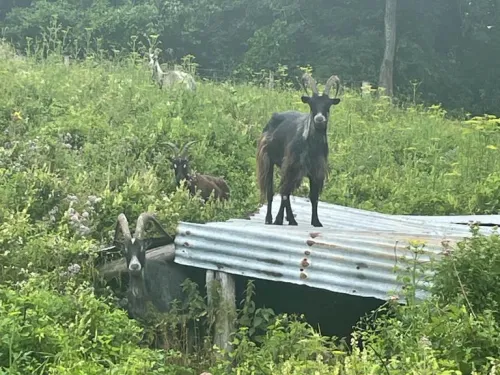
A mix of feral goats.
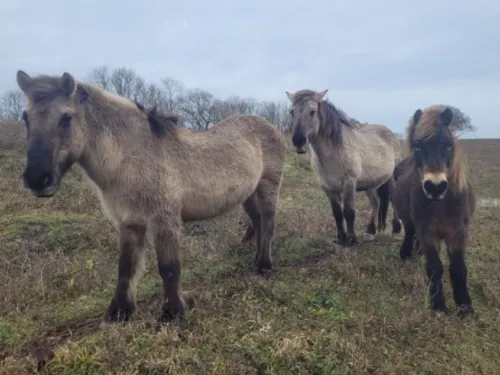
Exmoor, fell, and konik ponies.
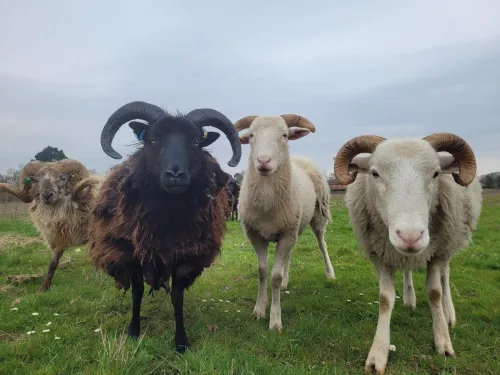
Hebridean, herdwick, Manx, Shetland-cross, and white-faced woodland sheep.
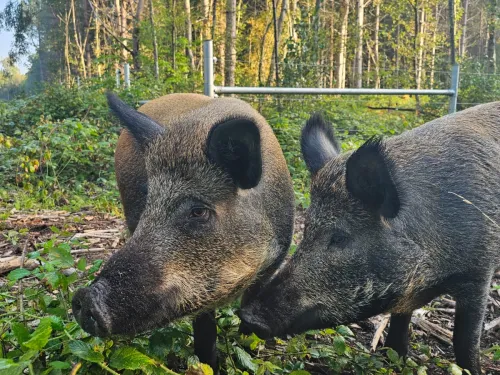
Iron-age and large black pigs.
At Nemo Down in Dover, the impact is clear. Neglected and abandoned for years, the site was overgrown with scrub. It was forgotten, bleak, silent.
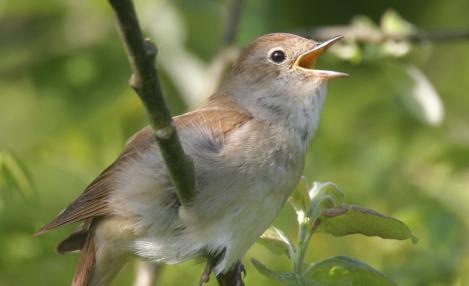
But thanks to generous supporters, just like you, we were able to purchase this reserve and introduce konik ponies and longhorn cattle to graze and keep scrub in check. Now, orchids have returned to the downland slopes, and yellowhammers and lesser whitethroats sing once more. Grazing animals are amazing conservationists – helping us manage land more efficiently, more sustainably and on a far larger scale than traditional methods ever could. You can help grow this work, so that more wild spaces can thrive. But this work takes investment.
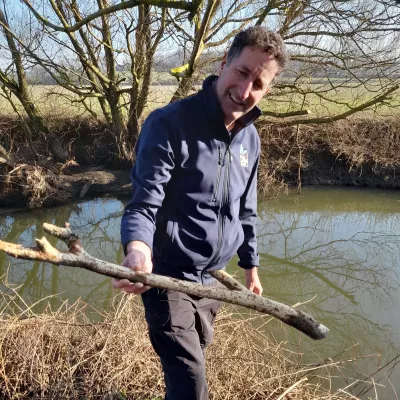
Thanks to your support for local community-based projects, we’re working with neighbours and local authorities to reverse the scrubbing over of Dover’s precious chalk slopes. We’ve reintroduced grazing animals and, whilst there’s still a lot to do, these areas are slowly coming back to life.Ian, Area Manager for Kent Wildlife Trust
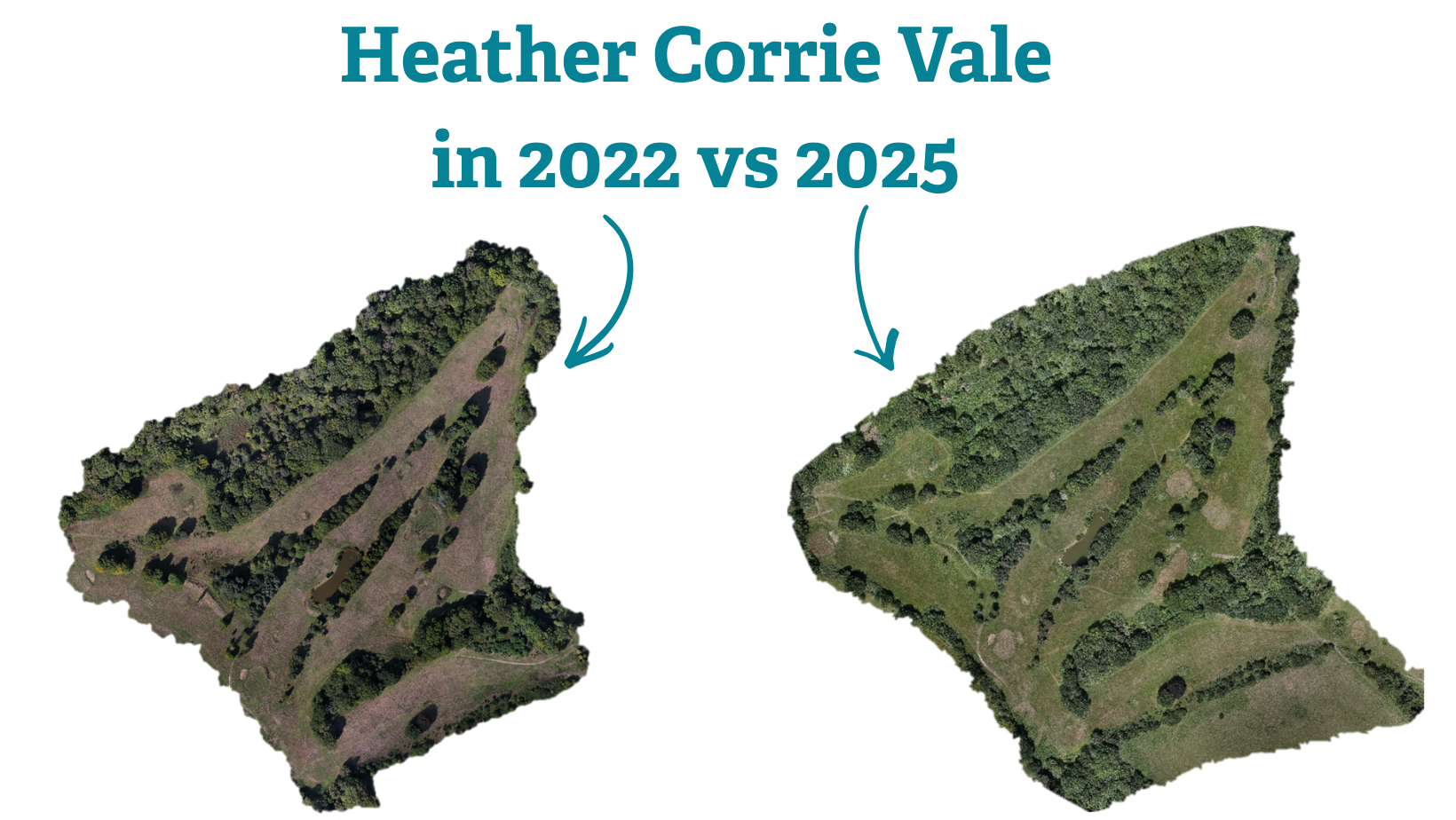
Over at Heather Corrie Vale, a herd of longhorn cows have been making a world of difference. This site in Sevenoaks was previously an intensely managed golf course, with a matt of course grass as a result of years of mechanical mowing.
The land has slowly been transformed back to a wilder state, supporting a range of wildlife from ivy mining bees utilising the abandoned sand pits to palmate news taking up residence in the reclaimed ephemeral ponds. Since the cattle went on in early 2024 the site has changed considerably, with the cows allowing the woodland edge habitat to encroach, increasing scrub whilst keeping sections of the pasture open.
No, the Big Give is free to Kent Wildlife Trust. To make it free at the point of use to charities, The Big Give offers donors the chance to gift 17.5% of their donation to them, funding their future work. To ensure your full donation comes to us, make sure you change or zero-out the amount that goes to the Big Give by choosing 'custom amount'.
The Big Give offers donors the chance to gift a percentage of their donation to them, funding their future work. To ensure your full donation comes to us, make sure you choose ‘custom amount’ and remove the default percentage that goes to the Big Give themselves.
More about The Big Give’s tipping system can be found here.
For all donations you can apply Gift Aid on top - while it’s not counted in the matched funding, it does still unlock an extra 25p per £1 donated at no extra charge to the donor.
Just make sure we have your full legal first name and surname otherwise we won’t be able to claim – initials, nicknames or using your middle name won’t count!
If our target is reached, and all the matched funds have been unlocked, you can still use the Big Give to donate to us until 29th April. Your donations won’t be doubled, but you’ll still be making a huge impact on the health of our precious landscapes.
There are so many ways to support our work, and we value everything you have already done to help us. So, if you have an idea, or think one of the below might be for you, please contact us at [email protected]
Members, supporters, and community representatives:
Companies:
Grant makers:
We know Wilder Grazing works; we’ve seen the impact across our own reserves and now have reached a critical juncture. Managing our conservation grazers, looking after their welfare, and monitoring the impact of their work all takes funding. Without investing in the programme now, we won’t be able to continue investing in the growth and development of conservation grazing across Kent. Biodiversity continues to decline at an alarming rate, and we must restore more land, more quickly, if we are to turn the tide. We know conservation grazing is key to this, and we can’t afford to wait.
If we don’t raise the funds needed from this appeal, the Wilder Grazing programme will continue. However, it will mean that our impact will be limited. Instead of investing time to grow the programme among third parties and across our own reserves, we will simply continue to graze existing sites until opportunities for investment arise.
The Nature Restoration Fund is Kent Wildlife Trust’s biggest ever appeal aiming to raise £3m by 2030. This ambitious target represents the urgency we now face to tackle the concurrent nature and climate crises.
To shine the spotlight on our wonderful habitats and vibrant species, we’ll be breaking down the appeal into three focused sprints each year. This means that the funding target for each sprint contributes to the overall £3m goal – but it gives everyone the opportunity to support the work they connect with.
As a charity we rely on the generosity of our supporters, members, corporate partners and trusts and foundations. We run a maximum of four appeals per year, which always ask for funding to support the work we deem most at risk. Sometimes this is to save a piece of precious habitat that is at risk of being developed, and sometimes this is to ensure a project that needs funding can continue to run.
Conservation grazing requires careful planning well in advance. Before any animals can be introduced to a reserve, we often need to carry out preparatory work such as installing livestock fencing and water troughs. To protect wildlife, we schedule this work around sensitive periods like breeding and nesting seasons — which means securing funding early is essential if we're to make an impact this year.
Raising funds by the end of April also allows us to plan grazing across Kent Wildlife Trust's own reserves and set up third-party grazing arrangements with confidence. As with everything we do, we're committed to the highest standards of animal welfare, and we won't begin any work until we're sure the programme is financially sustainable.
Yes, if you are a UK taxpayer you can Gift Aid your donation to make it go even further. At no cost to you, Kent Wildlife Trust will be able to claim an extra 25% on top of your donated amount. Just complete our Gift Aid declaration found here or get in touch with us at [email protected] if you have any questions.
Did you know that Gift Aid rules have changed? All it means is that we now need your full first name to submit a claim. So, if you haven’t completed a Gift Aid declaration for us recently, but want to ensure we can claim 25% extra on your donation, fill out another one today!
Conservation grazers are livestock used to manage land for nature. These natural behaviours, which can include foraging, grazing, and dust bathing, help promote biodiversity by giving new shoots the chance to grow and attracting insects which ultimately provide food sources for other native species. Even their dung becomes part of a thriving ecosystem.
Our Wilder Grazers can often be found at Blean, Hothfield, Darland Banks, and many more reserves. They often rotate to ensure the animals are getting a rich diet and contributing to the strategic management of many precious habitats.
We often post updates on our social media channels.
Reserves with Wilder Grazing animals on, that are usually open to the public, remain accessible. While the public can visit, we advise caution as with any animal.
We ask that you do not approach the animals or try to touch them. Even when animals appear relaxed, they can become startled, feel threatened, or want to protect their young. For our cattle we advise a minimum of 10 meters distance, that of a bus, or 20 during calving seasons.
Please do not allow pets to run up to, chase, or otherwise intimidate the grazing animals as this can cause distress, ultimately resulting in heart failure and death of the animal.
Remember, you're in their home!
Kent Wildlife Trust relies on philanthropic donations from individuals, major donors, companies and trusts and foundations to fund our work. And, like everyone else, this money is not guaranteed.
While there are some payments that are available due to the land we manage, these only go a short way to funding the work that must be done.
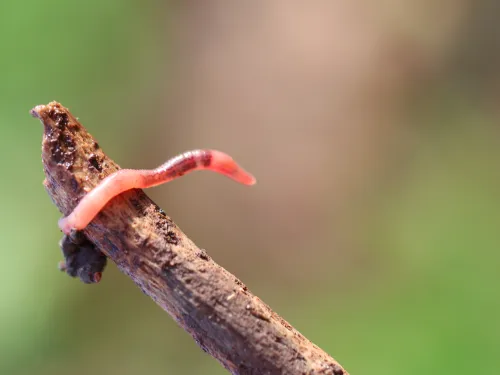
One of the many benefits of using grazing livestock in conservation management is that they produce dung. Their dung acts in various ways to enhance the landscape and provides benefits for a range of organisms that would otherwise be excluded in a…
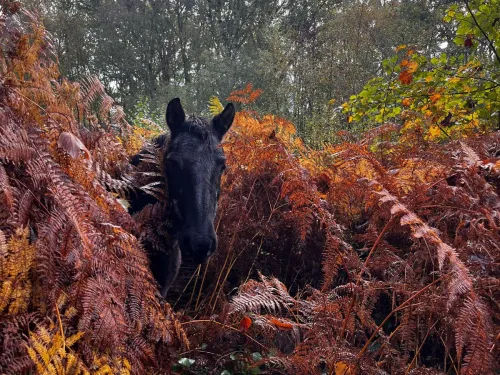
Koniks (sometimes referred to as Konik Polski) are a non-native primitive breed that originate from Poland. They are a descendant of the tarpan, a type of European wild horse that went extinct in the 19th century. They have been bred for almost 80 years…
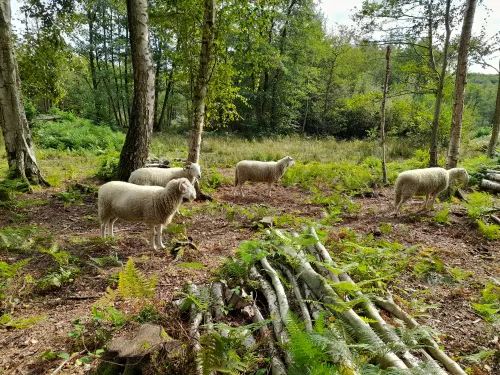
With our Amazing Grazing appeal putting the spotlight on our grazers, let's explore exactly what conservation grazing is and the impact it has.
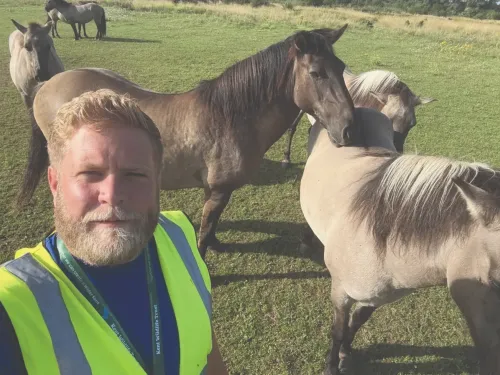
Hear from four of our amazing livestock checkers. Some have been part of the team for many years, and others just a few months.
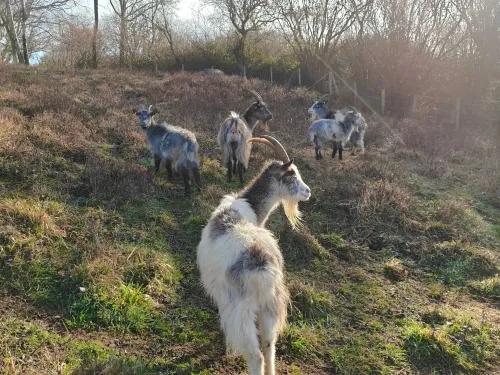
Recent changes to UK livestock protection laws are welcome news for nature – and for the conservation grazing animals that play a vital role in caring for Kent’s landscapes.
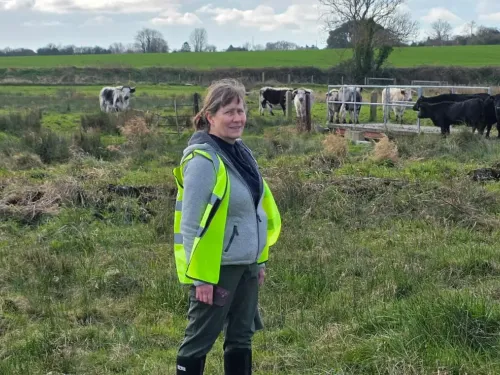
Liz & Steve Dallison have been involved with KWT since 2010 and begun livestock checking around 4 years ago. In this blog, they talk about the best bits and challenges the work brings!